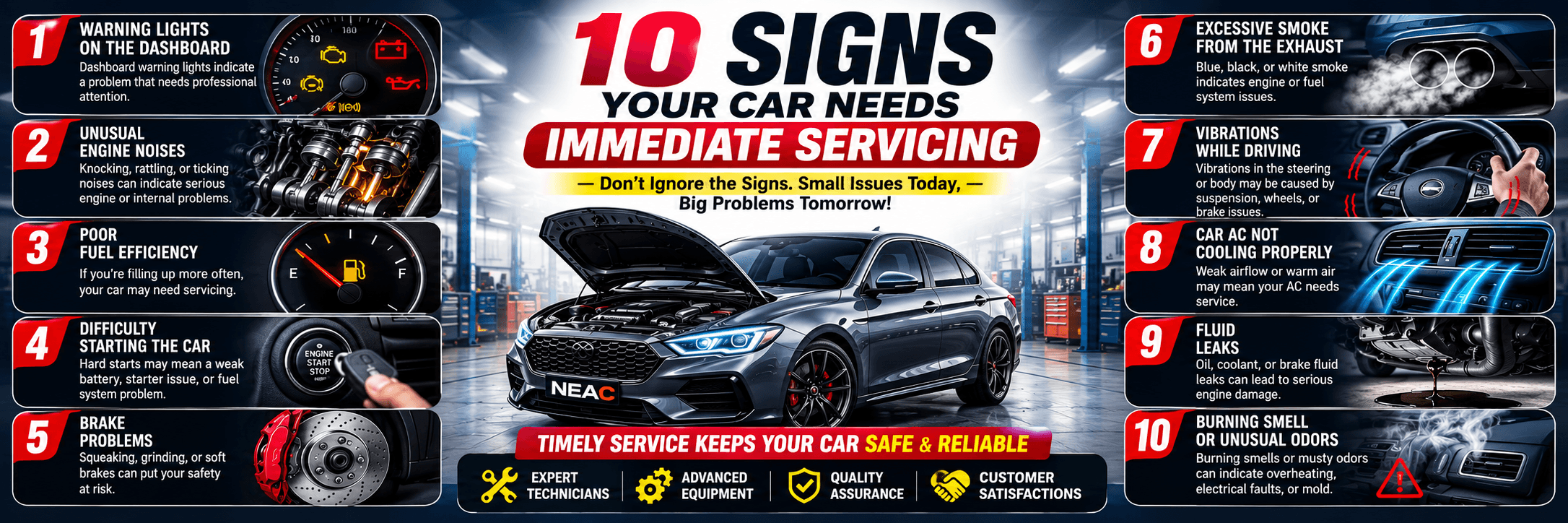
10 Signs Your Car Needs Immediate Servicing
Your car talks to you long before it breaks down completely — through strange noises, warning lights, smells, and small changes in how it feels to drive. The trick is knowing which signals are minor annoyances and which ones mean "stop ignoring me and get to a mechanic." Catching problems early doesn't just save you money on repairs — it can prevent a breakdown on the highway or, worse, an accident.
Below are the 10 clearest signs your car needs servicing right away — not next month, not "when you get a chance."
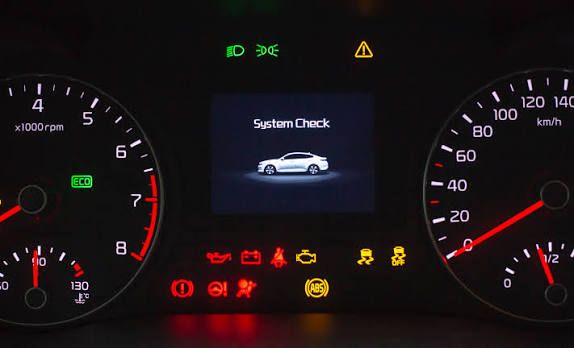
1. Dashboard Warning Lights Stay On
The check engine light, oil pressure light, or battery light staying on isn't decorative — it's your car's onboard computer flagging a fault. A steady light usually means "get it checked soon"; a flashing check engine light means "stop driving and get it checked immediately," since it often signals a misfire that can damage the catalytic converter.
2. Unusual Noises (Grinding, Squealing, Knocking)
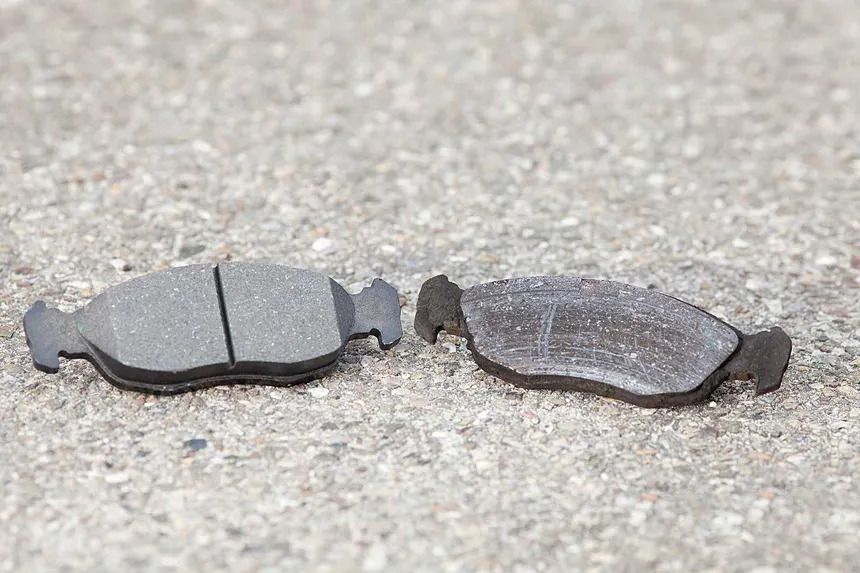
- Squealing when braking → worn brake pads
- Grinding while braking → pads are gone, metal is hitting metal
- Knocking or ticking from the engine → low oil pressure or worn engine components
- Clunking over bumps → worn suspension parts
Any new noise that wasn't there last week deserves attention.
3. Brake Problems
Brakes are non-negotiable. Squealing, grinding, a soft or spongy brake pedal, or the car pulling to one side when you brake are all signs your braking system needs immediate inspection.
4. Smoke or Steam From Under the Hood
- White smoke/steam → possible coolant leak or blown head gasket
- Blue smoke → engine burning oil
- Black smoke → fuel mixture problem
Any smoke means you should pull over safely and stop the engine rather than keep driving.
5. Strange or Strong Smells
- Burning rubber → slipping belt or rubbing tire
- Rotten eggs → catalytic converter or fuel system issue
- Sweet syrupy smell → coolant leak
- Burning oil smell → oil leak onto a hot engine part
6. Fluid Leaks Under the Car
A puddle under your parked car is a message. Note the color:
| Fluid Color | Likely Source | Urgency |
|---|---|---|
| Green, orange, or pink | Coolant | High — risk of overheating |
| Dark brown/black | Engine oil | High — risk of engine damage |
| Red | Transmission fluid | High — shifting problems |
| Clear | Condensation (AC) | Normal, no concern |
| Yellow-ish | Power steering fluid | Medium |
7. Vibration or Shaking While Driving
A steering wheel that shakes at speed often points to unbalanced tires or a bent wheel. Shaking felt through the whole car can mean worn engine mounts, driveshaft issues, or brake rotor problems. Vibration tends to worsen quickly if left unaddressed.
8. Difficulty Starting the Car
A slow crank, repeated failed attempts, or a car that starts only sometimes usually points to a weakening battery, a failing starter motor, or an alternator that isn't charging properly. Don't wait for a morning it won't start at all.
9. Poor Fuel Efficiency
If you're filling up more often than usual with no change in driving habits, it can indicate a failing oxygen sensor, dirty air filter, tire pressure issues, or spark plug problems — all of which get more expensive to fix the longer they're ignored.
10. Warning Signs From the Transmission
Delayed or jerky gear shifts, slipping gears, a burning smell from the transmission, or unusual noises in neutral all point to transmission trouble — one of the costliest repairs to postpone, since damage compounds quickly.
Quick Reference: Symptom-to-Urgency Chart
| # | Sign | Urgency Level |
|---|---|---|
| 1 | Dashboard warning lights (flashing) | 🔴 Immediate |
| 2 | Grinding / knocking noises | 🔴 Immediate |
| 3 | Brake problems | 🔴 Immediate |
| 4 | Smoke or steam from hood | 🔴 Immediate |
| 5 | Strong burning/sweet smells | 🟠 Same day |
| 6 | Fluid leaks (coolant, oil, transmission) | 🔴 Immediate |
| 7 | Vibration while driving | 🟠 Same day |
| 8 | Difficulty starting | 🟡 Within a few days |
| 9 | Poor fuel efficiency | 🟡 Within a week |
| 10 | Transmission issues | 🔴 Immediate |
🔴 Immediate = stop driving / get towed or serviced right away 🟠 Same day = drive only if necessary, book service today 🟡 Within a few days = schedule a service appointment soon
Frequently Asked Questions
What are the warning signs that a car needs to be serviced? The most common signs are dashboard warning lights, unusual noises (grinding, squealing, knocking), fluid leaks, smoke from the hood, vibration while driving, and poor fuel economy. Any one of these on its own is worth a check; more than one at a time usually means service is overdue.
Can I keep driving with the check engine light on? A steady check engine light means you can usually drive carefully to a mechanic soon. A flashing check engine light means stop driving immediately, since it often signals an engine misfire that can cause expensive damage.
How do I know if it's my brakes or something else making noise? Brake-related noise is almost always a squeal or grind that happens specifically when you press the brake pedal and disappears when you're not braking. Noise that continues regardless of braking usually points to suspension, wheel bearings, or the engine instead.
Is it safe to drive with a fluid leak? It depends on the fluid. Coolant, oil, or transmission fluid leaks should be treated as urgent, since driving on low fluid can cause severe engine or transmission damage. A clear puddle is usually just harmless AC condensation.
Final Thoughts
Most major car repairs start out as small, ignorable symptoms. The cars that last the longest usually belong to owners who treat these ten signs as non-negotiable service triggers rather than background noise. When in doubt, a quick inspection from a trusted mechanic is far cheaper than a breakdown, a tow, or a full system failure.
Stay ahead of the wear, not behind it.